
Why Annual Skin Cancer Checks Save Lives: A Guide from Brentwood Dermatologists
Why Annual Skin Cancer Checks Save Lives: A Guide from Brentwood Dermatologists
- posted: Feb. 16, 2026
At Nashville Dermatology Physicians in Brentwood, Tennessee, serving the greater Nashville area, Dr. Jeffrey Berti and Dr. Toula Berti have dedicated their careers to helping patients maintain healthy skin. As dermatologists with over 20 years (combined more than 40 years) of experience, they emphasize preventive care through thorough yet efficient skin examinations. One of the most powerful tools in fighting skin cancer is also one of the simplest: the annual skin check.
The Simple Power of a Skin Check. Skin cancer often develops quietly, with subtle changes that might go unnoticed by the untrained eye. A small, evolving mole, a persistent rough patch, or a non-healing sore can be early warning signs. These changes are frequently harmless, but when they signal something more serious, early detection makes all the difference. Regular professional skin checks allow Dr. Berti to spot abnormalities before they advance. Subtle shifts—such as asymmetry in a mole, irregular borders, varied colors, diameter larger than a pencil eraser, or evolving features (the ABCDE criteria for melanoma)—can be identified and addressed promptly.
Catching skin cancer early dramatically improves outcomes: for melanoma detected in its initial stages, the five-year survival rate exceeds 99%. Without early intervention, survival rates drop significantly as the cancer spreads. Annual checks empower patients by turning potential threats into treatable conditions, literally saving lives through vigilance and expertise.Skin Cancer:
The Most Common Cancer in the United States is skin cancer. It is the leading form of cancer in the U.S., far outpacing others in incidence. While official registries often exclude non-melanoma types, estimates show millions of cases annually—more than breast, prostate, lung, and colorectal cancers combined. Here are the main types, their typical descriptions, and prevalence:
- Basal Cell Carcinoma (BCC) — The most common skin cancer, accounting for the majority of cases (around 3.6 million estimated diagnoses per year). It often appears as a pearly or waxy bump, a flat flesh-colored or brown scar-like lesion, or a sore that bleeds, oozes, or crusts and doesn't heal. BCC grows slowly and rarely spreads, but it can cause significant local damage if untreated.
- Squamous Cell Carcinoma (SCC) — The second most common, with about 1.8 million cases estimated annually. It typically presents as a firm red nodule, a flat sore with a scaly crust, or a new sore on an old scar. SCC can grow more aggressively and may spread to other parts of the body if not caught early.
- Melanoma — Less common than BCC and SCC but far more dangerous, with around 104,000–112,000 new invasive cases projected in recent years (plus in situ cases). It often arises from an existing mole or as a new pigmented spot, appearing asymmetrical, with irregular borders, multiple colors (black, brown, red, white, blue), larger than 6mm, or changing over time. Melanoma accounts for most skin cancer deaths but has excellent prognosis when detected early.

These numbers highlight why proactive screening is essential—skin cancer affects one in five Americans by age 70, yet most cases are highly curable with early action.
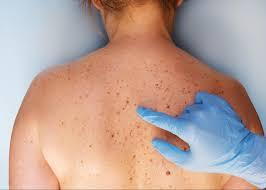
What to Expect During a Skin Exam at Nashville Dermatology Physicians. Many patients worry that a full skin check will be invasive, time-consuming, or uncomfortable. At our Brentwood practice, we prioritize patient comfort and efficiency. A typical exam takes 15–20 minutes and involves a systematic head-to-toe evaluation of your skin, including areas not easily visible (like the scalp, back, between toes). You'll be provided with a gown for privacy, and the process is straightforward—no pain, no lengthy procedures unless a suspicious spot requires a quick biopsy (which is usually minor and done on the spot). Drs. Berti use their extensive experience to quickly identify concerns while addressing any questions you have. We recommend annual checks for most adults, especially those with fair skin, a history of sun exposure, many moles, or a family history of skin cancer. More frequent visits may be advised for higher-risk patients.
Take the Next Step Toward Healthier SkinThe message is clear: annual skin checks are a simple, powerful way to protect yourself. In a region like Nashville, with plenty of sunny days and outdoor activities, staying ahead of skin cancer is especially important.If you're due for a skin check or have noticed any changes in your skin, contact Nashville Dermatology Physicians today at (615) 212-2517 or visit our office at 1001 Health Park Drive, Suite 470, Brentwood, TN 37027. Drs. Jeffrey Berti and Toula Berti are here to provide personalized, compassionate care in a welcoming environment.Your skin deserves attention—schedule your appointment and take an important step in safeguarding your health. Early detection isn't just smart; it saves lives.

Why Annual Skin Cancer Checks Save Lives: A Guide from Brentwood Dermatologists
- posted: Feb. 16, 2026
At Nashville Dermatology Physicians in Brentwood, Tennessee, serving the greater Nashville area, Dr. Jeffrey Berti and Dr. Toula Berti have dedicated their careers to helping patients maintain healthy skin. As dermatologists with over 20 years (combined more than 40 years) of experience, they emphasize preventive care through thorough yet efficient skin examinations. One of the most powerful tools in fighting skin cancer is also one of the simplest: the annual skin check.
The Simple Power of a Skin Check. Skin cancer often develops quietly, with subtle changes that might go unnoticed by the untrained eye. A small, evolving mole, a persistent rough patch, or a non-healing sore can be early warning signs. These changes are frequently harmless, but when they signal something more serious, early detection makes all the difference. Regular professional skin checks allow Dr. Berti to spot abnormalities before they advance. Subtle shifts—such as asymmetry in a mole, irregular borders, varied colors, diameter larger than a pencil eraser, or evolving features (the ABCDE criteria for melanoma)—can be identified and addressed promptly.
Catching skin cancer early dramatically improves outcomes: for melanoma detected in its initial stages, the five-year survival rate exceeds 99%. Without early intervention, survival rates drop significantly as the cancer spreads. Annual checks empower patients by turning potential threats into treatable conditions, literally saving lives through vigilance and expertise.Skin Cancer:
The Most Common Cancer in the United States is skin cancer. It is the leading form of cancer in the U.S., far outpacing others in incidence. While official registries often exclude non-melanoma types, estimates show millions of cases annually—more than breast, prostate, lung, and colorectal cancers combined. Here are the main types, their typical descriptions, and prevalence:
- Basal Cell Carcinoma (BCC) — The most common skin cancer, accounting for the majority of cases (around 3.6 million estimated diagnoses per year). It often appears as a pearly or waxy bump, a flat flesh-colored or brown scar-like lesion, or a sore that bleeds, oozes, or crusts and doesn't heal. BCC grows slowly and rarely spreads, but it can cause significant local damage if untreated.
- Squamous Cell Carcinoma (SCC) — The second most common, with about 1.8 million cases estimated annually. It typically presents as a firm red nodule, a flat sore with a scaly crust, or a new sore on an old scar. SCC can grow more aggressively and may spread to other parts of the body if not caught early.
- Melanoma — Less common than BCC and SCC but far more dangerous, with around 104,000–112,000 new invasive cases projected in recent years (plus in situ cases). It often arises from an existing mole or as a new pigmented spot, appearing asymmetrical, with irregular borders, multiple colors (black, brown, red, white, blue), larger than 6mm, or changing over time. Melanoma accounts for most skin cancer deaths but has excellent prognosis when detected early.
These numbers highlight why proactive screening is essential—skin cancer affects one in five Americans by age 70, yet most cases are highly curable with early action.
What to Expect During a Skin Exam at Nashville Dermatology Physicians. Many patients worry that a full skin check will be invasive, time-consuming, or uncomfortable. At our Brentwood practice, we prioritize patient comfort and efficiency. A typical exam takes 15–20 minutes and involves a systematic head-to-toe evaluation of your skin, including areas not easily visible (like the scalp, back, between toes). You'll be provided with a gown for privacy, and the process is straightforward—no pain, no lengthy procedures unless a suspicious spot requires a quick biopsy (which is usually minor and done on the spot). Drs. Berti use their extensive experience to quickly identify concerns while addressing any questions you have. We recommend annual checks for most adults, especially those with fair skin, a history of sun exposure, many moles, or a family history of skin cancer. More frequent visits may be advised for higher-risk patients.
Take the Next Step Toward Healthier SkinThe message is clear: annual skin checks are a simple, powerful way to protect yourself. In a region like Nashville, with plenty of sunny days and outdoor activities, staying ahead of skin cancer is especially important.If you're due for a skin check or have noticed any changes in your skin, contact Nashville Dermatology Physicians today at (615) 212-2517 or visit our office at 1001 Health Park Drive, Suite 470, Brentwood, TN 37027. Drs. Jeffrey Berti and Toula Berti are here to provide personalized, compassionate care in a welcoming environment.Your skin deserves attention—schedule your appointment and take an important step in safeguarding your health. Early detection isn't just smart; it saves lives.
Nashville Dermatology Physicians
1001 Health Park Drive Suite 470,
Brentwood, TN 37027
Monday
7:00 am - 4:00 pm
Tuesday
7:00 am - 4:00 pm
Wednesday
7:00 am - 4:00 pm
Thursday
11:00 am - 6:00 pm
Friday
Closed
Saturday
Closed
Sunday
Closed